
oysters
Oysters don’t usually get the same attention as flashier marine animals, but the longer we’ve lived around the water, the more we’ve realized how quietly powerful they are. They’re unassuming—easy to overlook unless you’re eating them—but oysters play a huge role in keeping coastal ecosystems healthy, especially here in Maryland.
What They Look Like—and Why You Know Them
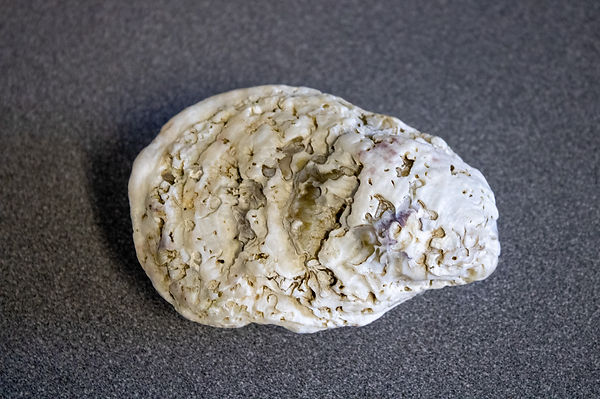
Oysters are bivalves, meaning they have two shells hinged together, much like clams. Their shells are thick, rough, and irregularly shaped, often forming a curved, crescent-like shape. You’ve almost certainly encountered them before, probably on a plate. That familiarity sometimes makes it easy to forget that oysters are also living animals with an ecological job to do.
What Oysters Do All Day
Oysters are filter feeders, which means they eat by cleaning the water around them. As water passes through their shells, they remove organic debris, microscopic algae, and tiny drifting organisms like zooplankton. An individual oyster can filter up to around 50 gallons of water per day, which adds up quickly when you consider entire reefs working at once. This process improves water clarity and quality, benefiting everything from underwater grasses to fish.
Where They Live
Unlike many marine species that need full saltwater conditions, oysters thrive in small to medium-sized rivers and estuaries where freshwater mixes with the sea. Historically, these waterways were lined with massive oyster reefs. Today, those reefs are far rarer than they once were, the result of decades of overharvesting and habitat damage.
Making a Comeback
Oyster populations declined dramatically due to intense harvesting pressure, but restoration efforts have started to reverse that trend. As oysters return, they don’t just clean the water; they also build reef structures that provide habitat for fish, crabs, and other invertebrates. These reefs act like underwater cities, increasing biodiversity in areas where the ecosystem was once struggling.
Personal Connection to Restoration
My family lives on the water, and we’ve had the chance to participate in oyster restoration firsthand. A few times now, we’ve grown oysters by hanging cages off our dock filled with shells seeded with oyster spat. Over time, the oysters grow (though you can’t tell just by looking at them), and when they’re ready, we take a boat out and release them onto an active restoration reef. It’s one of those experiences that makes conservation feel tangible. If you live on the water, I can’t recommend participating in a project like this enough. It’s simple, surprisingly rewarding, and makes you feel genuinely connected to the ecosystem outside your back door.


Why Oysters Matter
Oysters may be small, but their impact is outsized. By filtering water, stabilizing shorelines, and creating habitat, they support entire estuary systems. Their gradual return in Maryland is a reminder that restoration works.
Written by Olivia Jishi
Sources:
"Oyster Mussel (Epioblasma capsaeformis)." Beacham's Guide to the Endangered Species of North America, edited by Walton Beacham, et al., vol. 2, Gale, 2001. Gale In Context: Science, link.gale.com/apps/doc/CV2644400389/SCIC?u=seve27129&sid=bookmark-SCIC&xid=9b0e8df4. Accessed 28 June 2025
.https://www.cbf.org/programs/oyster-restoration/oyster-restoration-in-maryland/