
Pollinators and the Black Eyed Susan
Jump To
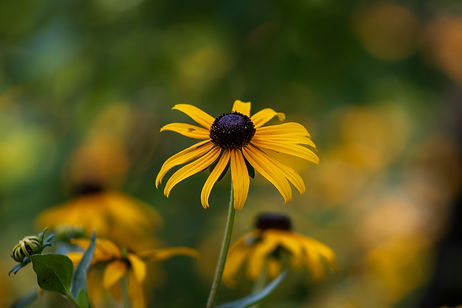
Black-eyed Susans (Rudbeckia) are native to North America. Native plants evolved alongside native insects, birds, and mammals, which means they tend to fit seamlessly into local ecosystems. What looks like a simple flower is actually far more complex. The dark “eye” at the center isn’t a single structure, but a dense cluster of tiny individual flowers, each offering nectar. Together, they form an inviting landing zone for pollinators, drawing in bees, butterflies, moths, flies, and small wasps throughout the growing season.
For pollinators, black-eyed Susans are more than just a pit stop. Many insect species rely on them for food, and a surprising number use Rudbeckia as a host plant for part of their life cycle. Later in the year, if the spent flower heads are left standing, birds take over, feeding on the nutritious seeds well into fall and winter. Letting the garden stay a little messy until spring turns out to be one of the easiest ways to support wildlife.


Bees: The Quiet Workforce
If you’ve ever watched The Bee Movie, you know much of what I’m about to say. Except I can’t offer an iconic line like “Ya like jazz?” to permeate the article. I’ve settled on listening to jazz music to help me get in the true bee-storytelling mood.
Bees are some of the most frequent visitors to black-eyed Susans, and for good reason. Unlike wasps, which often have more varied diets, bees survive entirely on nectar and pollen. Nectar provides sugar for energy, while pollen supplies protein and other nutrients. Every foraging trip is a balancing act between feeding themselves and gathering food to support the next generation.
As bees move from flower to flower, pollen clings to their bodies and is transferred to new plants. This simple motion—landing, feeding, flying—drives pollination, the process that allows plants to produce seeds and fruit. An enormous portion of flowering plants depend on bees, including many of the fruits, vegetables, and nuts humans rely on every day.
Despite their reputation, bees are not naturally aggressive. While females can sting, they do so primarily in defense. My mom used to tell my sister and I that as a kid, she would pick up bumblebees and cradle them in her hands. We were much too nervous to try. Social species like honey bees and bumble bees are more likely to sting when their nests are threatened. Most native bees live solitary lives, nesting in soil, hollow stems, or decaying wood. They don’t produce honey or form hives. Instead, a single female builds a nest, stocks it with pollen and nectar, lays her eggs, and leaves the larvae to develop on their own. Their adult lives are brief—often just a few weeks—which makes access to reliable flowers like black-eyed Susans all the more important. I don’t think i’ll tell my sister this information, as every time she sees a bee on the road in the summer, she insists we save it by getting it onto a nearby flower. She believes the bees will live to their ripe old age because of this action. I think that’s beautiful, even if they’re probably only going to live a few more days.


Some bees use a really cool technique known as buzz pollination. By gripping a flower and rapidly vibrating their flight muscles, they shake loose pollen that would otherwise stay trapped. This tactic doesn’t work in your very own pantry, unfortunately. Jars of peanut butter do not float through the air the same way pollen does. So us humans have to settle for ladders, unfortunately.
Monarch Butterflies: Travelers in the Garden
Everyone knows monarch butterflies. Their bright orange wings, traced with black veins and edged in white-spotted borders, are impossible to ignore. That bold coloration isn’t just beautiful—it’s a warning. Monarchs are toxic to many predators, thanks to the milkweed they eat as caterpillars.
While monarch caterpillars depend exclusively on milkweed, adult butterflies rely on nectar from a variety of flowers, including black-eyed Susans. These blooms help fuel one of the most extraordinary migrations on the planet. Each fall, monarchs in North America travel thousands of miles south, eventually gathering in the same forests in California or central Mexico year after year. The individuals that make the journey have never been there before, yet somehow find their way to the same locations their ancestors used.


Why Pollinators Matter
Bees, butterflies, birds, bats, beetles, and other pollinating animals are responsible for the reproduction of the majority of flowering plants worldwide. Their work underpins entire ecosystems and directly supports human life. Roughly one out of every three bites of food we eat exists because of pollinators. They also help maintain healthy soils, reduce erosion, support biodiversity, and contribute to carbon storage by enabling plants to grow and reproduce.And yet, many pollinator populations are declining. Habitat loss is one of the biggest drivers of this trend. As open land is developed and wild spaces shrink, pollinators lose both food sources and places to nest. The widespread use of pesticides adds another layer of pressure.
Small Choices, Real Impact
Supporting pollinators doesn’t require a complete lifestyle overhaul. Planting native species like black-eyed Susans provides reliable food. Leaving stems, seed heads, and leaf litter through winter creates shelter and nesting sites. Being thoughtful about pesticide use—or avoiding it altogether—helps ensure that the insects visiting flowers aren’t harmed by the very spaces meant to support them.
Written by Olivia Jishi
Sources:
https://extension.psu.edu/black-eyed-susan-beautiful-and-beneficial
https://dnr.maryland.gov/wildlife/pages/habitat/wawhatsthebuzz.aspx
https://www.nwf.org/Educational-Resources/Wildlife-Guide/Invertebrates/Bees
https://kids.nationalgeographic.com/animals/invertebrates/facts/monarch-butterfly